Inventory collection
Tie every field to a named purpose, sensitivity level, owner, and reason it must be collected at this stage.
Reduce form privacy and security risks through data minimization, consent, validation, abuse controls, storage, access, exports, and deletion.
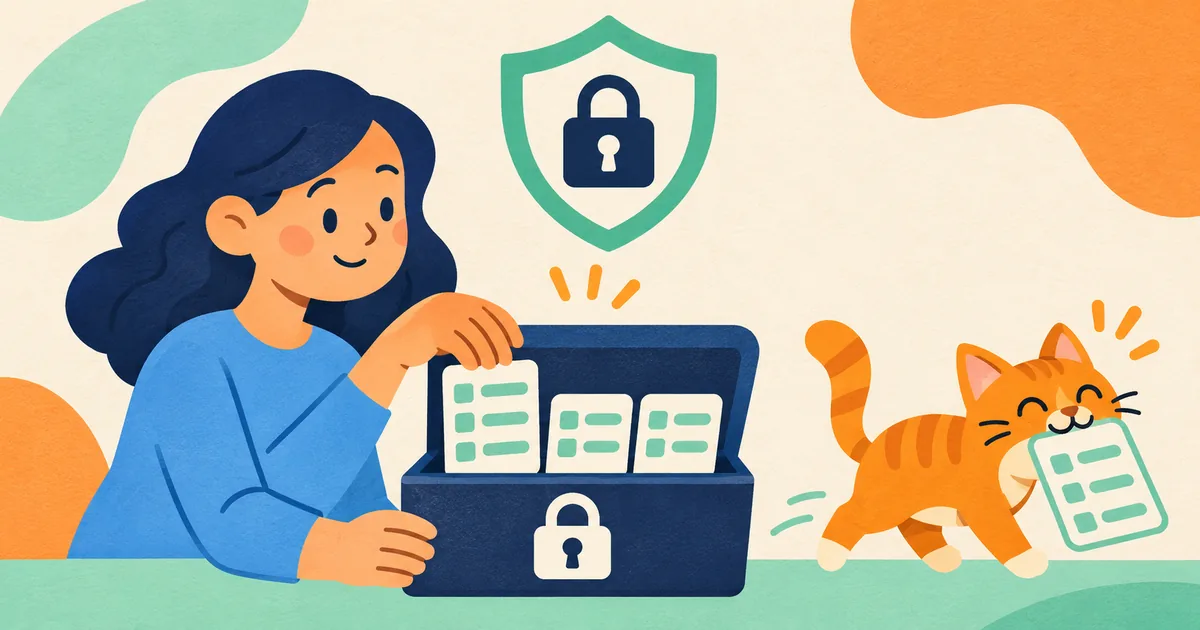
A form changes the moment it collects information. It becomes a data handling system with copies, access decisions, retention periods, abuse risks, and deletion obligations. Privacy asks whether the data should be collected and how its use is explained. Security asks how the system resists misuse and limits harm. Good form operations need both.
This hub begins with less collection because data that is never requested cannot leak from the response database. It then covers layered validation, consent choices, spam controls, and spreadsheet exports. The guidance is general and must be adapted to the laws, contracts, threat model, and sensitivity of the specific workflow.
Turn the data inventory into technical controls with the online form security basics.
Use the online form templates as concrete field inventories for privacy and security review.
Review the entire information life cycle because the form page is only the first place a response exists.
Tie every field to a named purpose, sensitivity level, owner, and reason it must be collected at this stage.
List the database record, notifications, integrations, exports, backups, and people who can view or change each copy.
Consider abusive submissions, unauthorized access, exposed exports, formula injection, and disclosure through logs or email.
Set retention and deletion rules for primary records, backups, local downloads, and accounts that no longer need access.
Trace one value across every copy. Privacy and security decisions fail when the database is reviewed but notifications, exports, and backups are ignored.
| Copy or stage | Minimum control | Decision owner | Closure evidence |
|---|---|---|---|
| Submitted record | Purpose limit, validation, and restricted access | Workflow owner | Recorded retention trigger |
| Notification or integration | Minimum necessary content and authenticated destination | System owner | Delivery and failure handling |
| CSV or local copy | Authorized export, safe transfer, and formula controls | Downloader | Deletion or approved archive |
| Backup and recovery copy | Bounded retention and tested restoration access | Service operator | Expiry and recovery log |
Decision: Do not collect the field until each expected copy has an access rule, retention trigger, and deletion owner.
Document informed consent choices in plain language. Adapt with your ethics reviewer.
Build a permission-based list with transparent topic choices.
Record the who, when, where, and what without turning the form into an investigation.
Collect auditable expense details while keeping approval outside the form.
Collect practical new-starter information in a consistent checklist.
Map every field to a purpose, reduce sensitive collection, explain use at the right moment, and control copies through deletion.
Decide whether consent belongs in the workflow, separate purposes, write a real choice, and preserve evidence without dark patterns.
Threat-model submission, validation, authorization, storage, logs, notifications, and deletion instead of relying on one filter.
Layer quiet abuse controls, rate limits, duplicate handling, risk review, and accessible fallback before adding a challenge.
Prevent spreadsheet formula execution, preserve data meaning, minimize exported fields, and control every downloaded copy.
Collect only values tied to the stated purpose and next action. Record who uses each value, where copies are created, how access is limited, and when each copy is deleted.
Not necessarily. Notifications, exports, integrations, backups, and staff downloads can retain the same information, so the retention process must cover every routine destination.